




.webp)
Most ecommerce brands don't die from bad products.
They die from overhead.
The designer. The copywriter. The product photographer. The fulfillment partner. The Shopify developer. The CRO consultant. The supplement manufacturer you found on Alibaba who takes eight weeks to produce and another three to ship — if they ship at all.
You don't have a business. You have a payroll. And every person on that payroll is standing between you and the only thing that matters: getting a product in front of a customer who wants to buy it.
This is the structural problem nobody in ecommerce wants to talk about. Not because it's controversial — because it's uncomfortable. Because the entire industry has been built on the premise that launching a brand requires a team. That you need to assemble experts. That the barrier to entry is the work, and you'd better learn to love it.
That premise is dead.
Two platforms killed it.
I. The Supplement Opportunity (And Why Most People Blow It)
Let's start with why supplements.
The global supplement market is projected to surpass $300 billion by 2028. Not tech. Not SaaS. Not AI. Capsules, powders, and gummies. Consumable products that people reorder every 30 days. Products with 40–60% margins. Products where customer loyalty compounds over time because once someone trusts a brand with what they put in their body, switching costs are enormous.
This is the single best product category in ecommerce for building a sustainable, recurring-revenue business. And most people who attempt it fail within 90 days.
Here's why.
Launching a supplement brand traditionally requires three capabilities simultaneously:
Product. You need a manufacturer. You need FDA-compliant formulations. You need custom labels. You need product photography. You need inventory — or at least a reliable supply chain that won't leave you holding $15,000 in unsold protein powder.
Storefront. You need a Shopify store. You need product pages that convert. You need a homepage, collection pages, upsells, a cart that doesn't leak revenue. You need it to look like a brand that someone would trust to put a capsule in their mouth — not a generic store slapped together from a free theme.
Growth. You need ads. Content. An acquisition strategy. A retention strategy. The thing that actually generates revenue.
The problem is that Product and Storefront consume 90% of your time and budget, leaving almost nothing for Growth — the only capability that actually makes money.
Most people spend three months sourcing a manufacturer, designing labels, building a store, and shooting product photos. By the time they're "ready to launch," they're broke, exhausted, and six months behind the competitor who figured out how to skip all of it.
II. Supliful: The Infrastructure for High-Performance Brands
Supliful isn't a sourcing tool. It's the infrastructure for the next generation of wellness and beauty brands.
200+ FDA-standard, market-ready products spanning supplements, skincare, and high-performance consumables. US-based fulfillment. Custom branding. The entire backend of a top-tier CPG company — without the operational friction.
Here's the shift: you're not "dropshipping." You're building a brand.
You select a premium formulation — say, a nootropic focus blend or a collagen peptide powder. You apply your custom branding using their built-in design tools. You launch. When a customer orders, Supliful handles manufacturing, labeling, and fulfillment invisibly. The customer experience is entirely yours, backed by a supply chain that supports fast shipping and elite-level reliability.
The numbers prove the model's power:
- 350,000+ brand builders active on the platform.
- 1.6M+ partner orders fulfilled.
- $64M+ in brand revenue powered to date.
By maintaining full brand ownership, you capture the true upside of the wellness market. Supliful's partner brands achieve an average $64 AOV and +56% customer loyalty — metrics that generic reselling could never touch. No inventory exposure. No customs complexity. No supply chain bottlenecks.
Supliful eliminates the entire Product layer of the stack. You move with the agility of a startup but the muscle of an enterprise, focusing solely on what matters: building, thriving, and conquering your niche.
But while Supliful provides the engine, you still need the vehicle — a high-converting storefront that turns brand story into brand equity.
That's where the second platform enters.
III. Atlas: The Storefront Problem, Solved
Atlas is an AI-powered Shopify co-pilot that automates all storefront operations — building, testing, and optimizing stores — so merchants can focus on growth.
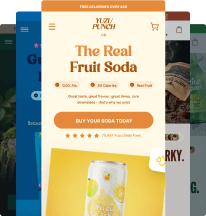
You give Atlas a product link. It generates a complete, conversion-optimized Shopify store around that product. Copy. Layout. Product pages. Upsells. Theme. Everything.
What takes most merchants 40+ hours takes Atlas minutes.
50,000+ merchants. $205 million+ in user-generated sales. Bootstrapped. No venture capital. Pure product-market fit.
But here's where it gets interesting when you pair it with Supliful.
Atlas doesn't just build stores. It generates AI product photos — studio-quality, ultra-realistic images from raw uploads. It creates sales pages and advertorials for content funnels. It includes a built-in bundler for volume discounts, BOGO offers, and free gift thresholds. It ships with a custom cart app loaded with upsells, scarcity timers, and free shipping progress bars.
Merchants using Atlas's upsell and bundling tools see 30–50% increases in average order value.
For a supplement brand, that's the difference between a $30 average order and a $45 one. On a product with 50% margins, that extra $15 in AOV is almost pure profit.
Atlas eliminates the entire Storefront layer of the stack. Design, copy, product photography, page building, conversion optimization — all of it. Gone. What used to require a designer, a developer, a copywriter, and a CRO agency now requires a product link and 10 minutes.
IV. The Stack: What Happens When You Combine Them
Here's the play.
Supliful handles Product. Manufacturing, formulation, compliance, labeling, inventory, fulfillment. You pick the product. They do everything else.
Atlas handles Storefront. Store generation, product pages, copy, photos, upsells, cart optimization. You paste a link. It builds everything else.
You handle Growth. Ads. Content. Community. The thing that actually makes money.
That's not a simplification. That's a restructuring of the entire ecommerce operating model. You've gone from needing a team of 5–10 people and $20,000+ in startup costs to needing two platforms and a monthly spend under $80.
Let's walk through what a launch actually looks like:
Day 1. Browse Supliful's catalog. Pick a product — let's say an ashwagandha stress relief supplement. Design your label. Your product is live on Supliful's fulfillment network.
Day 1, still. Copy your Supliful product link. Paste it into Atlas. Select a supplement-optimized template. Add your brand context — your target customer, your positioning, your tone. Hit Generate. Your entire Shopify store is built. Product pages, homepage, collection pages, upsells, branded cart. Done.
Day 2. Use Atlas's AI photo generator to create lifestyle product shots — your ashwagandha bottle on a clean desk, held by a model in a morning routine scene, staged next to a journal and coffee. Studio-quality images, zero photographer.
Day 2, still. Use Atlas's sales page generator to build an advertorial: "I Tried This Adaptogen For 30 Days — Here's What Happened." Content funnel ready.
Day 3. Launch ads. Drive traffic. Fulfill orders. Supliful ships. Atlas converts. You grow.
Three days. From zero to a live, branded supplement business with custom products, professional product photography, conversion-optimized pages, content funnels, and automated fulfillment.
No designer. No developer. No photographer. No fulfillment warehouse. No manufacturer. No copywriter.
Two platforms. Three days. One founder.
V. Why This Combination Is Structurally Unfair
"Unfair advantage" is one of the most overused phrases in business. But sometimes it's accurate.
Here's why this stack creates a genuine structural advantage:
Speed as a moat. In supplement ecommerce, speed to market is everything. Trends move fast — adaptogens, mushroom blends, GLP-1 support, gut health — and the brands that win are the ones that launch first, test fast, and double down on winners. When you can go from product idea to live store in a weekend, you can test five products in the time it takes a traditional brand to launch one. Most of those five will fail. One might do $10K/month. That's the game.
Capital efficiency. No inventory means no capital locked up in product. No design team means no payroll. No agency means no retainer. Your only costs are platform subscriptions and ad spend. Every dollar goes toward the thing that generates revenue — acquiring customers. A traditional supplement brand burns $15,000–$50,000 before making a single sale. This stack lets you launch for under $100.
Brand equity from day one. This is the killer. Supliful gives you private-label products — your brand, your label, your identity. Atlas gives you a store that looks like it was built by a funded DTC brand. From the customer's perspective, there's no difference between you and the brand that raised $2M in seed funding and hired a 10-person team. The product is FDA-compliant. The store is conversion-optimized. The photos are professional. The only difference is you spent a weekend and they spent a year.
Recurring revenue by default. Supplements are consumables. Customers reorder. A single customer acquired for $25 might spend $300+ over their lifetime. Supliful's fulfillment handles every reorder automatically. Atlas's cart and upsell tools maximize revenue on every transaction. The economics compound in your favor every month.
VI. The Objection You're Already Thinking
"If it's this easy, won't everyone do it?"
Yes. Some will.
But here's what "easy" actually means in this context. It means the infrastructure is easy. The logistics are solved. The storefront is automated. The supply chain is handled.
What's not easy — what will never be easy — is acquiring customers profitably. Writing the ad that stops the scroll. Choosing the right product for the right audience at the right time. Building a brand that people trust enough to put something in their body.
That's the work. That's where the skill lives. That's what separates the store that does $500/month from the one that does $50,000.
What Supliful and Atlas do is remove every obstacle between you and that work. They don't make the hard part easy. They make the easy part instant — so you can spend 100% of your time and energy on the hard part.
The merchants who win aren't the ones with the best-looking stores or the most sophisticated supply chains. They're the ones who spend all of their time on growth. This stack makes that possible.
VII. The Shift
The ecommerce industry sold you a lie for a decade.
It told you that building a brand meant mastering operations. That you needed to understand manufacturing, supply chain management, web development, graphic design, conversion rate optimization, and fulfillment logistics — on top of actually marketing and selling the product.
That was never the path. That was the tax. The unnecessary overhead that existed because the tools hadn't caught up to the opportunity.
The tools have caught up.
S
upliful turned product sourcing, manufacturing, and fulfillment into a solved problem. Atlas turned storefront design, copywriting, and conversion optimization into a solved problem.
What's left is the only thing that ever mattered: can you find customers who want what you're selling?
If you can answer that question, the rest is infrastructure. And infrastructure — for the first time in ecommerce history — is no longer your problem.
Two platforms. Under $80/month combined. An entire ecommerce team, replaced.
The brands that win from here won't be the ones with the biggest teams or the most funding. They'll be the ones who understood, earlier than everyone else, that the game changed — and the only thing left to master is growth.
*Atlas is an AI-powered Shopify co-pilot that automates storefront operations. 50,000+ merchants. $205M+ in user-generated sales.*
*Supliful is the premier brand-building engine for the health, beauty, and wellness sectors. 350,000+ brand builders. $64M+ in brand revenue powered.*
.webp)

.webp)